A Simple Luxury Upgrade: The Epecoya 79-Inch Console Table
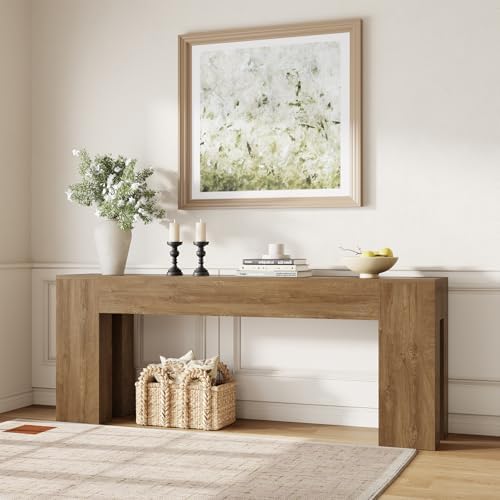
A room does not always need demolition to feel considered. Sometimes, the right horizontal line, the right warmth of wood, and a more intentional arrangement can restore the sense of balance a space has been missing.
The Epecoya Extra Long 79-Inch Sofa Console Table in Natural Oak is a strong example of that principle. Designed for use behind a sofa, along an entry wall, or beneath a large piece of art, it brings scale and visual structure to areas that often feel unfinished. Its farmhouse-modern silhouette is approachable, while the Natural Oak finish gives it enough warmth to work in transitional, contemporary, relaxed luxury, and layered traditional interiors.
At Modernize Methods LLC, we often begin a room refresh by identifying the pieces that can change the visual language of a space without changing its footprint. This console table is one of those pieces. View the Epecoya 79-Inch Console Table as a furnishing option for a no-demo luxury upgrade, then consider how color, lighting, art, and proportion can elevate the room around it.
In polished interiors, long console tables often do more than fill empty square footage. They help establish rhythm. They give a sofa a tailored back view, provide a visual bridge beneath artwork, and create a landing zone that feels more edited than accidental. That is especially valuable in open-concept homes, renovated suburban great rooms, upscale apartments, vacation rentals, and boutique commercial settings where one under-furnished wall can make an otherwise attractive room feel incomplete.
This is also the kind of furnishing that aligns beautifully with our no-demo philosophy. Rather than beginning with mess, delay, and budget creep, we often begin with proportion, layout, materials, and light. A well-scaled console can immediately sharpen a room’s architecture, support better styling, and help homeowners or property operators see how much transformation is possible before major construction ever enters the conversation.
For clients who want design clarity before they buy, Modernize Methods LLC offers $375 consultations and our signature $1,565 Visual Design Recommendation Plans, which map out furnishings, finishes, lighting, and layout with a luxury-forward, website-friendly process. For homeowners, that can mean less guesswork. For Airbnb hosts and commercial clients, it can mean stronger visual presentation and a better return on the square footage you already have.

Why the Long Console Changes a Room
A long console table gives a room something designers sometimes call a horizontal datum: a visual line that organizes the elements around it. It creates a sense of continuity across a wall, behind a sofa, or through an entryway.
Without that line, a large wall may appear disconnected from the furniture below it. A sofa can feel visually stranded in the center of the room. An entryway may have enough square footage but still lack a point of arrival. The addition of an extra-long console helps bridge those gaps.
The Epecoya table is particularly effective because its approximately 79-inch width has presence without the visual weight of a large cabinet. Its narrow depth allows it to sit behind many sofas or along a hallway wall while maintaining circulation. The double-base frame introduces structure beneath the top, but the open space keeps the piece from appearing too heavy.
This is design dignity through proportion. The console does not need to dominate the room. It simply gives the room a well-scaled foundation.
In a living room, it can visually connect the sofa to a fireplace, media wall, or large artwork. In a foyer, it can define the entry experience and provide a landing place for keys, mail, and carefully selected objects. In an office or commercial waiting area, it can make an otherwise blank wall feel finished and purposeful.
The result is not necessarily dramatic in the theatrical sense. It is more refined than that. The room begins to feel as though every element belongs.
The Psychology of Scale
Blank walls create a unique design problem. If the furnishing beneath them is too short, the wall can feel vacant. If the furnishing is too deep or too visually dense, the room can feel crowded. An extra-long console table occupies the middle ground: substantial enough to fill space, narrow enough to protect movement.
At approximately 79.15 inches wide, 13.75 inches deep, and 31.75 inches high, this Epecoya console has a generous horizontal footprint. Its proportions are suited to long sofas, large sectionals, broad entry walls, and oversized artwork.
That scale can organize visual flow in several ways:
- It gives the eye a clear path across the room.
- It creates a stable base for lamps, art, ceramics, and books.
- It helps balance tall architectural elements such as windows, fireplaces, or built-ins.
- It can make a compact entryway feel intentional rather than improvised.
- It provides a visual transition between the floor and the wall above.
Scale is also relational. A console should generally relate to the length of the sofa or wall it serves. A piece that is dramatically shorter than the sofa may look incidental. One that extends nearly across the back of the sofa feels integrated.
The Epecoya’s length makes it especially useful for the “in-between” rooms that are difficult to furnish: open-plan living areas, long hallways, apartment entryways, large foyers, and waiting areas where a standard accent table would disappear.
The table can also help direct attention. Place a large piece of art above it, and the console becomes an architectural base. Position it beneath a window, and it can turn an otherwise awkward span into a composed vignette. Set it behind a sofa, and it creates a second layer of function without taking over the room.
The Materiality of Engineered Wood
A polished interior should be beautiful, but it should also be honest about materials.
The Epecoya listing identifies the frame material as MDF and the top as engineered wood. That means this is not a solid-wood console table. Engineered wood and MDF are manufactured wood products made from wood fibers or particles formed into panels. They can provide a consistent surface, predictable dimensions, and an accessible price point, but they should not be represented as the same thing as a table made entirely from solid oak.
That distinction matters in luxury-minded design because material honesty shapes expectations. A piece can look elevated and still be value-conscious. In fact, many no-demo projects work best when investment is allocated strategically: perhaps toward a custom rug, layered lighting, or one standout art piece, while supporting furnishings provide the right scale and finish at a more accessible price point. The Epecoya table fits that category. Its appeal is rooted in proportion, warmth, and versatility rather than heirloom-grade joinery.
The Natural Oak finish is a visual treatment designed to evoke the warmth and grain of oak. In the right room, that warmth can be very effective, particularly when paired with linen, plaster tones, aged brass, wool, stone, leather, matte black accents, or softly veined marble. It is an easy bridge finish: warm enough for traditional and collected interiors, but clean-lined enough for more contemporary rooms.
The listing describes the surface as scratch-resistant. That claim should be understood in measured terms: it suggests added resistance during ordinary decorative use, not immunity from scratches, dents, moisture, or rough handling. Avoid dragging objects across the surface, and use protective pads beneath ceramics, lamps, and accessories that may move frequently.
Care is straightforward. The product guidance recommends wiping the surface with a damp cloth followed by a dry cloth. Avoid saturating the material, harsh abrasive cleaners, and prolonged exposure to moisture. Because engineered wood can be more vulnerable at edges and joints than solid wood, attentive care is worthwhile. If you are styling it with vases, drink service, or planters, use trays and liners so decorative living does not become unnecessary wear.
The table arrives requiring assembly; it is not fully assembled or custom-built. The listing includes an assembly guide and installation tool, and it references video support. The product information recommends two people for assembly. Customer feedback is mixed: some buyers describe the process as manageable, while others report that it is tedious or takes longer than expected. Set aside adequate space, organize the hardware before beginning, and avoid overtightening fasteners.
That two-person recommendation is worth taking seriously. A piece with this length can be awkward to balance alone, especially during the stage when the top and the double-base frame are being aligned. Even experienced DIY homeowners often find that larger furnishings go together more cleanly when one person stabilizes components while the other secures hardware.
The listing also shows multiple configuration options, including 79-inch and 94-inch sizes, along with Natural Oak, Black, Light Brown, Light Oak, and Walnut finishes. Verify the selected size, finish, current price, availability, seller, shipping terms, return policy, dimensions, and specifications before purchasing. Product information and pricing can change.
For a closer look at the current configuration, review the Epecoya product listing before placing an order.
Shop Now
Review the current Epecoya listing, confirm that the selected 79-inch Natural Oak configuration suits your room, and shop the piece as a starting point for a more intentional interior.
Styling the Surface
A long console offers generous surface area, but the most sophisticated styling is rarely the fullest styling. The goal is to create rhythm, not clutter.
Begin with one anchor. This may be a substantial lamp, a large ceramic vessel, a framed artwork leaning against the wall, or a sculptural object. From there, build in two or three supporting elements at different heights.
A refined arrangement might include:
- A substantial table lamp toward one side.
- A stack of two or three art or architecture books.
- A low ceramic bowl or stone object.
- A single branch arrangement or restrained greenery.
- A small framed photograph or collected object.
- Baskets beneath the table for concealed storage.
The rule of restraint is simple: leave negative space. The Natural Oak finish already contributes visual warmth, so it does not need to be surrounded by dozens of accessories. Let portions of the tabletop remain visible.
For a sofa table behind couch, keep the accessories low enough that they do not interfere with conversation or obstruct the view across the room. For an entryway console table, allow space for practical items without letting the surface become a drop zone. A small tray can gather keys and daily essentials, while baskets below can hold shoes, throws, or bags.
Repeat materials selectively. If the console has a warm wood finish, introduce that tone elsewhere through a picture frame, chair leg, woven basket, or side table. This makes the furnishing feel connected to the room rather than added afterward.

The No-Demo Living Room Upgrade
The no-demo approach is not a shortcut in the careless sense. It is a strategic way to prioritize the changes that produce the strongest visual and functional return before committing to construction.
A console table is a useful starting point because it can influence several design decisions at once. Place the Epecoya behind the sofa, then evaluate the wall color, lighting, art scale, and circulation in relation to its new horizontal line.
A tonal paint color can make the console appear more integrated. Consider warm white, mushroom, muted clay, soft greige, or a desaturated olive depending on the existing flooring and upholstery. The objective is not to match the oak exactly, but to create a calm backdrop that allows the warmth of the finish to read as intentional.
Layered lighting adds another level of polish. Use a table lamp on the console for a welcoming pool of light, then balance it with a floor lamp, wall sconce, or dimmable ceiling fixture elsewhere in the room. A single overhead light often flattens a space. Multiple low and medium light sources create depth.
Artwork should relate to the length of the console. One oversized piece can provide a confident focal point, while a carefully spaced pair or trio can create a more collected composition. Keep the lowest edge of the art visually connected to the furniture beneath it.
Textiles matter too. One reason a console works so well behind a sofa is that it lets you layer softness against structure. A boucle or wool throw, a lower-pile rug with subtle tonal variation, and pillows that repeat one or two wood-adjacent hues can make the room feel resolved instead of pieced together. If the console is in an entry, a runner and a pair of baskets can do similar work, giving the zone texture and purpose without visual noise.
Circulation is equally important. Because the table is approximately 13.75 inches deep, it can work in relatively narrow zones, but every room should be measured carefully. Confirm clearances behind the sofa, around door swings, beside walkways, and near heating or ventilation elements. A beautiful furnishing that interrupts movement is not a successful design solution.
The double-base frame is especially helpful here. It introduces enough architectural detail to feel styled even when the tabletop remains restrained, but it still leaves the space below visually open. That open base can preserve the airy feeling homeowners often want in updated living rooms, especially when compared with heavier case pieces that visually stop the eye.
For this reason, the no-demo process begins with planning, not purchasing. Explore the Epecoya console listing as one possible anchor, then explore Modernize Methods services for a design-led approach to color, furnishings, lighting, and construction planning.
A console table will not replace a structural renovation when walls, plumbing, or electrical systems need attention. But when the room’s primary challenge is visual emptiness, weak proportion, poor lighting, or scattered accessories, strategic furnishing can be remarkably effective.
This is where our $375 consultation and $1,565 Visual Design Recommendation Plan become practical tools, not just service descriptions. We help clients test whether a no-demo luxury approach will solve the real problem first. Sometimes the answer is yes: better placement, better scale, better lighting, better finishes. And sometimes that clarity reveals the need for deeper remodeling. Either way, planning before demolition protects both budget and design integrity.
Feng Shui and the Horizontal Datum
In Feng Shui-inspired design, furniture placement is often considered in relation to movement, balance, and the way energy travels through a room. The Epecoya console can support that interpretation when it is placed to ground a wall without blocking the path through the space.
Behind a sofa, it can create a stable visual boundary between the seating zone and the circulation zone. In an entryway, it can define arrival while still allowing the path from the door to remain open. In a hallway, it can provide a sense of rhythm without forcing people to weave around deep furniture.
Keep the surface composed and avoid allowing it to become overwhelmed by paperwork, bags, or miscellaneous objects. Clear sightlines and intentional placement can contribute to a calmer feeling.
This is a design interpretation, not a guaranteed outcome or a substitute for personal preference. The most important principles are practical: maintain safe clearances, avoid unstable arrangements, secure heavy objects appropriately, and create a room that feels comfortable to the people who use it.
Aging-in-Place and Sensory Wellness
Thoughtful design should support people at different stages of life. An extra-long console can contribute to that goal when used carefully.
In an aging-in-place context, the table may provide a visible landmark along a hallway or entry wall. A consistent material, such as the Natural Oak finish, can help define the boundary of a room without relying only on signage or visual contrast. A lamp can add a welcoming layer of light, provided cords are managed safely and the lamp is positioned securely.
The console may also serve as an organizing surface for frequently used items, but it should not become an obstacle. Keep pathways clear, avoid placing fragile objects at the edge, and consider whether baskets beneath the table are easy to reach without bending or crouching excessively.
In homes where sensory comfort matters, the warm oak tone, soft textiles, rounded ceramics, and low-glare lighting can create a more grounded atmosphere. These choices are general design considerations, not medical recommendations. Individual needs vary, and any accessibility or safety decisions should be evaluated with the appropriate professional.
The Airbnb and Commercial ROI Factor
For Airbnb hosts, the value of a furnishing is partly functional and partly photographic. Guests often form their first impression through listing images, and a blank wall or poorly proportioned room can make a property feel less complete.
An extra-long console table can create a recognizable visual moment behind a sofa, in a foyer, or near the entrance of a rental. Style it with a large piece of art, layered lighting, a few durable accessories, and concealed baskets. The composition can help the room photograph with more depth and intention.
It also supports one of the most overlooked principles in short-term-rental styling: guests respond to spaces that feel intentionally finished. They may not identify the console table as the reason, but they feel the effect of it. The room reads as complete in listing photos. The sofa looks anchored instead of floating. The entry feels like a curated arrival point instead of leftover circulation space. These subtleties can strengthen perceived value.
That does not guarantee higher occupancy, stronger nightly rates, or increased revenue. Real performance depends on location, pricing, reviews, amenities, photography, operations, and market conditions. The console is best viewed as one element in a broader guest-experience strategy.
For commercial interiors, the same principle applies. A waiting area, boutique office, salon, restaurant entry, or residential leasing office can benefit from a long, narrow furnishing that creates a finished backdrop without consuming too much floor area. However, confirm that the piece is appropriate for the intended level of commercial use and review the seller’s specifications before purchasing for a business environment.
If the table will be part of a rental or commercial design package, consider the current product configuration here, then evaluate it alongside durability, installation, maintenance, and replacement considerations.
At Modernize Methods LLC, we regularly frame Airbnb and commercial design decisions around return on impression as much as return on investment. The furnishing choices that photograph well, wear reasonably, and help a property feel elevated often contribute to a stronger brand story. Our $375 consultation can help narrow those choices quickly, while our $1,565 Visual Design Recommendation Plan is ideal when you want a room-by-room roadmap that aligns aesthetics, guest experience, and operational practicality without defaulting immediately to renovation.

A 10-Day No-Demo Transformation Manual
Day 1: Measure the room
Measure the wall, sofa, doorways, stairwells, and the intended path of delivery. Record the distance behind the sofa and the clearance around the future console. Confirm that the 79-inch width suits the wall without appearing cramped.
Day 2: Edit the room
Remove accessories that no longer serve the room. Clear the wall and temporarily relocate small furniture. The goal is to see the architecture and circulation honestly before adding anything new.
Day 3: Establish the tonal palette
Choose a paint color that supports the existing floor, upholstery, and Natural Oak finish. Test samples at different times of day. Warm neutrals, muted earth tones, and soft mineral shades often provide a polished backdrop without competing with the wood tone.
Day 4: Paint selectively
Apply the tonal paint to the console wall or the relevant room surfaces. If a full repaint is not necessary, consider a single accent wall, a color-washed foyer, or refreshed trim. Allow the paint to cure according to the manufacturer’s guidance.
Day 5: Assemble with patience
Unpack the console carefully and inspect the components before assembly. Follow the guide, use the included installation tool as directed, and plan for two people. Watch the referenced assembly video if available. Because feedback on assembly time and ease is mixed, do not rush this step.
Day 6: Place the console
Position the assembled piece and check that it sits level and stable. Reconfirm the walking path and the relationship between the tabletop and sofa back. If the table is near a high-traffic area, consider appropriate anchoring or stability precautions.
Day 7: Layer the lighting
Add a lamp to the console, then evaluate the room at night. Introduce a floor lamp, wall light, or dimmable source if the room still feels flat. Conceal cords wherever practical and keep them away from walking paths.
Day 8: Install the art
Choose one large artwork or a balanced grouping. Center it in relation to the console and the room, not automatically to the nearest wall edge. Leave enough breathing room between the art and tabletop so the composition feels deliberate.
Day 9: Add baskets and accessories
Place one or two woven baskets beneath the console for throws, bags, or other soft goods. Style the top with a lamp, books, ceramic, and one organic element. Resist filling every inch. The Natural Oak surface should remain visible.
Day 10: Edit and photograph
Live with the arrangement for a full day. Move through the room from different directions. Remove anything that blocks sightlines or feels unnecessary. Photograph the completed room in daylight and evening light to evaluate whether the visual balance holds from multiple perspectives.
The power of this ten-day process is that it creates a meaningful transformation without requiring demolition. It also produces a clearer foundation for deciding whether a future renovation is necessary.
If you want the process translated into a room-specific action plan, this is exactly the kind of challenge our team solves. A $375 consultation can help determine whether your best next move is furnishing, paint, lighting, layout revision, or construction planning. A $1,565 Visual Design Recommendation Plan goes further by showing you the finished direction in full color so you can make purchasing decisions with more confidence and less waste.
Modernize Methods LLC: Design Clarity Before Construction
A successful room is not created by one product alone. It comes from the relationship between proportion, color, texture, lighting, furnishings, and the way people move through the space.
Modernize Methods LLC helps homeowners, executives, builders, developers, Airbnb hosts, and commercial clients make those decisions with greater clarity. Our $1,565-per-room Visual Design Recommendation Plan provides full-color renderings, element sheets, and shopping lists so you can see the intended direction before investing in a larger project.
That service is particularly useful when you are considering a no-demo home renovation. Instead of guessing whether a console, paint color, light fixture, rug, or artwork will work together, you receive a visual plan that shows how the room can come together. We can also help determine when a furnishing-led update is enough and when luxury home remodeling or construction is the more appropriate next step.
For clients who want focused guidance before committing to a full plan, our $375 design consultation offers a practical place to begin. We can discuss room proportions, furniture placement, material direction, lighting, aging-in-place considerations, Feng Shui-inspired flow, Airbnb presentation, or commercial design needs.
You can book a consultation or request a quote, or explore the Modernize Methods project portfolio for examples of how color, texture, lighting, and furnishings can transform a space.
Conclusion
The Epecoya 79-Inch Console Table is a simple furnishing with substantial design potential. Its length can ground a blank wall, define an entryway, support a sofa, and create a more photographable setting for a home, Airbnb, office, or waiting area.
Its Natural Oak finish brings warmth, while the rectangular silhouette and wooden double-base frame offer farmhouse-modern versatility. The engineered wood/MDF construction should be understood honestly, as should the required assembly, the two-person recommendation, the scratch-resistant surface claim in everyday-use terms, the straightforward damp-cloth-and-dry-cloth care guidance, and the mixed customer feedback regarding installation. The available configuration options may vary, so verify the chosen size, finish, current price, availability, seller, shipping, return terms, dimensions, specifications, and all current listing details before purchasing.
Used thoughtfully, the table becomes more than a surface for accessories. It becomes the first move in a room with better proportion, clearer circulation, layered lighting, and a stronger sense of arrival. It is not a substitute for every renovation need, but it is exactly the kind of furnishing that can make a room feel custom-considered without opening walls or living through a drawn-out remodel.
Review the Epecoya 79-Inch Natural Oak console table, then pair the furnishing with a professionally considered plan from Modernize Methods LLC. With a $375 consultation or a $1,565 Visual Design Recommendation Plan, a no-demo luxury update can move from an appealing idea to a room you can confidently bring to life.